About This Webinar
Monitoring the effectiveness of neoadjuvant chemotherapy is essential for optimizing treatment strategies in breast cancer patients. While conventional imaging modalities such as MRI and mammography have clinical utility, they involve limitations like radiation exposure and contrast agent dependency. Diffuse optical tomography (DOT) has emerged as a promising, non-invasive, radiation-free, and contrast-agent-independent method for evaluating tumor response.
This study presents the development of a continuous-wave back-reflection DOT (CW rDOT) system employing 21 bi-wavelength LEDs (730 nm and 850 nm) and 32 photodetectors in an 8x8 configuration, designed to monitor changes in tissue oxygenation and hemoglobin concentration during neoadjuvant chemotherapy. To assess system performance, in vitro experiments were conducted using breast-mimicking phantoms with optical properties representative of biological tissue (scattering coefficient us' = 10 cm-1, absorption coefficient ua = 0.04-1). Tumor-like inclusions (10 mm and 20 mm in diameter) were embedded at depths ranging from 10 mm to 30 mm. Image reconstruction was performed using the transpose-free quasi-minimal residual algorithm.
Results demonstrated accurate detection of inclusion size and depth, with reliable visualization up to 3.5 cm. These findings support the potential of CW rDOT as a real-time, in vivo imaging tool for neoadjuvant chemotherapy response monitoring.
*** This presentation premiered during the
2025 BioPhotonics Conference. For more information on Photonics Media conferences and summits, visit
events.photonics.com
About the presenter
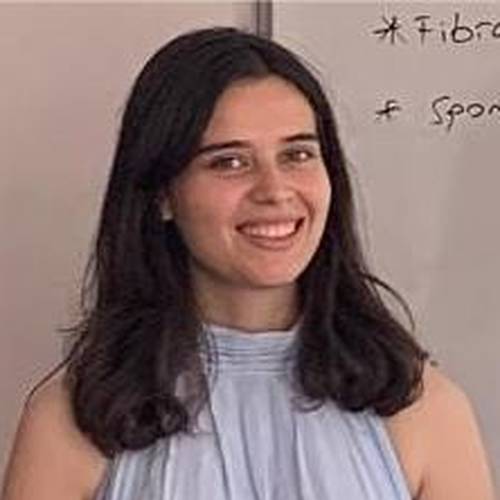
Betül Kahya graduated as the valedictorian of her class in Biomedical Engineering from Inönü University, building a strong foundation in the fundamentals of biomedical sciences and engineering. Currently, she is pursuing a doctorate in biophysics at Akdeniz University, building on her expertise through exposure to advanced techniques and interdisciplinary approaches that explore the complexities of biological systems and apply physical principles to address medical challenges.
Kahya’s current research is centered on the design and development of optical imaging systems for medical diagnostics, with particular emphasis on diffuse optical tomography (DOT), VIS-spectroscopy, and tissue oxygen saturation monitoring. These studies aim to improve non-invasive diagnostic capabilities and contribute to the advancement of biomedical optics in clinical applications. Through these experiences, she has developed advanced technical expertise and a focused research interest in novel optical technologies for improving medical diagnostics.