About This Webinar
The mechanical properties of tissues, such as elasticity, can serve as critical biomarkers for diagnosing various diseases and monitoring their progression. Optical coherence elastography (OCE) and Brillouin spectroscopy are noninvasive optical techniques that undergo rapid development for the mechanical characterization of biological samples in 3D at a variety of length scales - from tissues to cells. OCE generally involves measuring deformation or mechanical waves induced by a loading (stress applied to a medium) using optical coherence tomography and applying a mechanical model to estimate a mechanical parameter, such as Young's modulus, which is then mapped into an image.
Brillouin spectroscopy, on the other hand, is a product of photon-phonon interaction and provides a quantitative measurement of the bulk modulus. This presentation will include an overview of several examples of OCE and Brillouin spectroscopy to characterize tissues, cells, and biomaterials, and will provide a perspective on likely future advances and opportunities in the field of optical elastography.
*** This presentation premiered during the
2025 BioPhotonics Conference. For more information on Photonics Media conferences and summits, visit
events.photonics.com
About the presenter
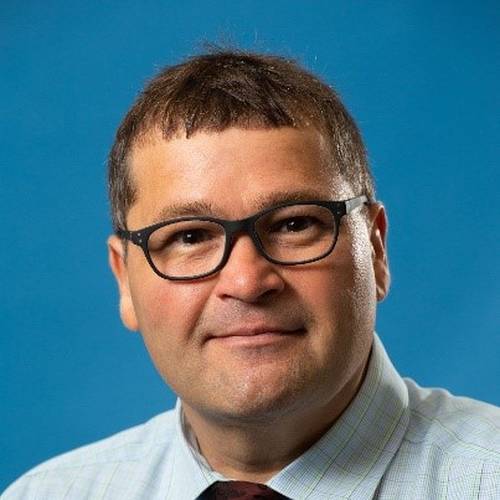
Kirill Larin, Ph.D., is the Cullen Endowed Chair and Professor of Biomedical Engineering at the University of Houston. Larin received his first master’s in laser physics and mathematics from the Saratov State University, Russia, in 1995, his second master’s in cellular physiology and molecular biophysics in 2001, and his doctorate in biomedical engineering in 2002 from the University of Texas Medical Branch.
His research contributions are in Biomedical Optics and Biophotonics, and the development and application of various optical methods for noninvasive and nondestructive imaging and diagnostics of tissues and cells. He made significant contributions to the development of optical elastography methods. He is the recipient of the prestigious Presidential Award from Russian President Boris Yeltsin. He was inducted as a Fellow of SPIE in 2015, a Fellow of Optica in 2016, and a Fellow of AIMBE in 2020. He is the 2025 recipient of the SPIE Biophotonics Technology Innovator Award.