 LASEROPTIK Exhibits in Munich
LASEROPTIK GmbH
For over 40 years LASEROPTIK has been developing and manufacturing high power optics and coatings. An average of 180,000 custom optics per year is produced for laser applications in industry, medicine, and science. Let’s share experiences at booth # B1.120.
|
|
 ALS-IR 1762 — High Power at 1762 nm for Ba+
Toptica Photonics AG
A significant leap forward in quantum information processing, offering unparalleled stability and control over quantum states. The system was developed specifically for the 6S to 5D transition in barium ions. With high power, narrow linewidth enablement, and exceptional stability.
|
|
|
 Diffraction Gratings for Telecommunication
CASTECH INC.
CASTECH’s high DE reflection grating is ideal for WSS and other applications in the optical communication industry. The high-precision design of the grating provides outstanding diffraction efficiency and perfect uniformity.
|
|
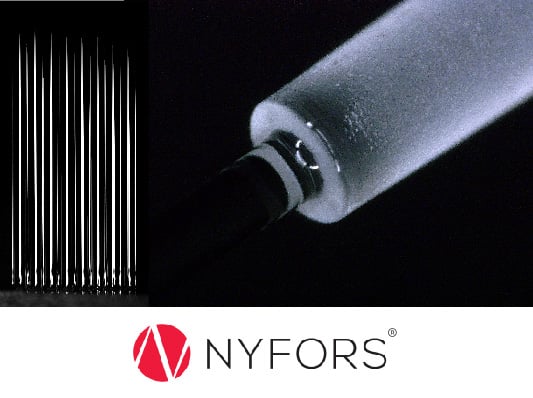 CO2 Laser Glass-Processing
NYFORS Teknologi AB
CO2 laser glass-processing is designed to produce high-power and sensitive photonic components and complex structures. It guarantees contamination-free processing for fiber linear, 2D and gapless array splicing, ball lensing, end-capping, and many other challenging processes. NYFORS also manufactures automated high-precision solutions for fiber preparation, such as stripping, cleaving, recoating, and end-face inspection. NYFORS offers custom workcell automation solutions.
|
|
|
|
| |
|
The Evolution of Microscopy – Current Landscape and Considerations
Wed, Jun 18, 2025 11:00 AM - 12:00 PM EDT
David Biss of Optikos walks through a brief history and primer on microscopy, which was largely unchanged until the last 70 years. With that backdrop, this presentation delves into common types of modern microscopy: confocal microscopy, fluorescence microscopy, multiphoton microscopy, and superresolution microscopy. He explores a comparison of similarities and differences between these modalities and considerations for selection. Attendees will learn that the optical principles of lens design for microscope objectives have not changed significantly over time, i.e., the importance of contrast and resolution. However, new microscopy modalities have improved the core principles to address specific market applications. Specifically, microscopy has evolved significantly from early single-lens devices to sophisticated techniques capable of observing individual molecules and complex biological processes. Key advancements include improvements in lens technology, the development of various light sources, the introduction of fluorescence microscopy, and the rise of super resolution microscopy techniques. Presented by Optikos.
|
|
|
Tools for Analyzing, Controlling, and Simulating Biological Systems
Tue, Jun 24, 2025 1:00 PM - 2:00 PM EDT
It was discovered that one can physically magnify biological specimens by synthesizing dense networks of swellable polymer throughout them, and then chemically processing the specimens to isotropically swell them. This method, which is called expansion microscopy, enables ordinary microscopes to do nanoimaging – important for mapping molecules throughout cells, tissues, and organs. As a second example, Ed’s team serendipitously discovered that microbial rhodopsins, genetically expressed in neurons, could enable their electrical activity to be precisely controlled in response to light. These molecules, now called optogenetic tools, enable causal assessment of how neurons contribute to behaviors and pathological states, and are yielding new candidate treatment strategies for brain diseases. Finally, the development of new strategies such as robotic directed evolution, fluorescent reporters enable the precision measurement of signals such as voltage. To reveal relationships between different molecular signals within a cell, there is work of developing spatial and temporal multiplexing strategies that enable many such signals to be imaged at once in the same living cell.
|
|
|
Call for Articles
Photonics Media is currently seeking technical feature articles on a variety of topics for publication in our magazines (Photonics Spectra, BioPhotonics, and Vision Spectra). Please submit an informal 100-word
abstract to editorial@Photonics.com, or use our online submission form.
|
|
|
|

We use cookies to improve user experience and analyze our website traffic as stated in our Privacy Policy. By using this website, you agree to the use of cookies unless you have disabled them.
| |