Photonics HandbookBusiness
SCHOTT, AZUR Space Bolster Material Supply Chain Amid Satellite Constellation Boom
MAINZ, Germany, Nov. 24, 2025 — SCHOTT and AZUR SPACE have jointly developed a solar cell cover glass for space applications, developed with funding from the European Space Agency and the German Aerospace Center (DLR). The collaboration will deliver a cover glass compatible with a wide range of solar cell types, from silicon cells to advanced III-V multijunction solar cells, which are the industry standard for modern satellites.
It further aims to provide a stable and scalable European supply chain for space-qualified cover glass tailored for next-generation satellite power systems.
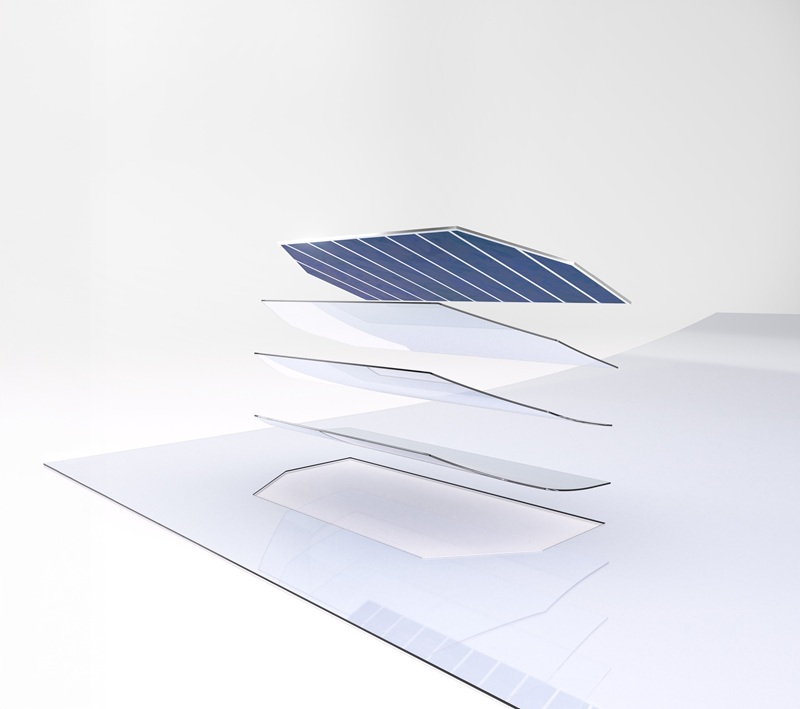
SCHOTT Solar Glass exos provides enhanced radiation resistance and optical performance for simple silicon cells up to III-V multijunction satellite solar cells. Courtesy of SCHOTT.
The glass is compatible with a wide range of solar cell types, from silicon cells to advanced III-V multijunction solar cells. AZUR SPACE provided testing and initial validation for the product.
SCHOTT Solar Glass exos is designed to provide exceptional UV absorption and optical stability. The glass is highly resistant to solarization, with transmission characteristics that remain virtually unchanged over time. Additionally, the precisely tuned UV transmittance edge of the glass allows manufacturers to fine-tune UV protection by selecting the appropriate glass thickness. This controlled cutoff design shields underlying adhesives and sensitive materials from premature UV exposure, enhancing durability and long-term bonding stability.
With a coefficient of thermal expansion (CTE) of 6.9 × 10⁻⁶ K-1 precisely matched to gallium arsenide solar cells, exos minimizes mechanical stress and enhances structural integrity under thermal cycling. The cerium-doped material is undergoing qualification in accordance with the standards of the European Cooperation for Space Standardization.
/Buyers-Guide/Schott-Solar-GmbH/c17416